
Cold War through Political Cartoons
Political cartoons are prejudiced and biased because they represent the artist's point of view, as does an editorial. They are intended to be controversial and characterized in nature. Their meaning is conveyed by both visual and verbal clues.
the Truman Doctrine & the Marshall Plan

Political Cartoon
"A cartoonist is a writer and artist, philosopher, and punster, cynic and community conscience. He seldom tells a joke, and often tells the truth, which is funnier. In addition, the cartoonist is more than a social critic who tries to amuse, infuriate, or educate. He is also, unconsciously, a reporter and historian. Cartoons of the past leave records of their times that reveal how people lived, what they thought, how they dressed and acted, what their amusements and prejudices were, and what the issues of the day were."
- Every cartoon should be placed in a historical and geographical context (Cold War).
- All personalities represented in a cartoon should be identified.
- Cartoon analysis should finish with a description of the overall message of the cartoon.
- Pay close attention to possible symbols, the visual clues sent out from the cartoon, as well as how to interpret captions, the verbal clues sent out from the cartoon.
- Pay attention to size and placement of people, objects, symbols, and writing on the cartoon.

Symbolism
Symbolism may refer to a way of choosing representative images in line with abstract rather than literal properties, allowing for the broader interpretation of a carried meaning than more literal concept-representations allow.
A religion can be described as a language of concepts related to human spirituality. Symbolism hence is an important aspect of most religions.
After you identify the symbols in a cartoon, think about what the cartoonist intends each symbol to stand for.
A religion can be described as a language of concepts related to human spirituality. Symbolism hence is an important aspect of most religions.
After you identify the symbols in a cartoon, think about what the cartoonist intends each symbol to stand for.
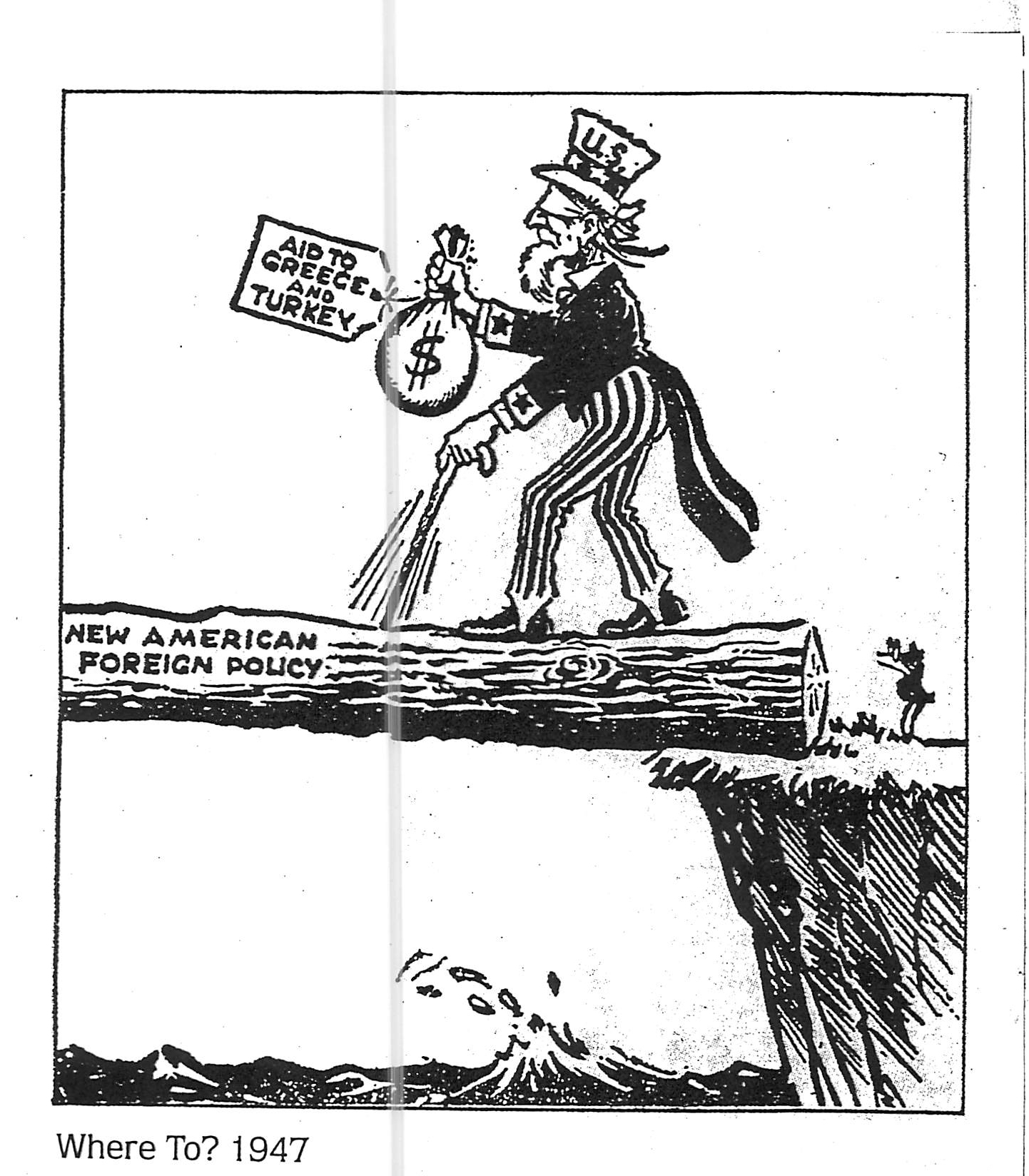
Metaphor
A figure of speech in which a term or phrase is applied to something to which it is not literally applicable in order to suggest a resemblance, as in “A mighty fortress is our God.”
Something used, or regarded as being used, to represent something else; emblem; symbol.
Something used, or regarded as being used, to represent something else; emblem; symbol.

Exaggeration
Sometimes cartoonists overdo, or exaggerate, the physical characteristics of people or things in order to make a point.
When you study a cartoon, look for any characteristics that seem overdone or overblown. (Facial characteristics and clothing are some of the most commonly exaggerated characteristics.) Then, try to decide what point the cartoonist was trying to make through exaggeration.
When you study a cartoon, look for any characteristics that seem overdone or overblown. (Facial characteristics and clothing are some of the most commonly exaggerated characteristics.) Then, try to decide what point the cartoonist was trying to make through exaggeration.

Labeling
Cartoonists often label objects or people to make it clear exactly what they stand for.
Watch out for the different labels that appear in a cartoon, and ask yourself why the cartoonist chose to label that particular person or object. Does the label make the meaning of the object more clear?
Watch out for the different labels that appear in a cartoon, and ask yourself why the cartoonist chose to label that particular person or object. Does the label make the meaning of the object more clear?

Analogy
An analogy is a comparison between two unlike things that share some characteristics. By comparing a complex issue or situation with a more familiar one, cartoonists can help their readers see it in a different light.
After you’ve studied a cartoon for a while, try to decide what the cartoon’s main analogy is. What two situations does the cartoon compare? Once you understand the main analogy, decide if this comparison makes the cartoonist’s point more clear to you.
After you’ve studied a cartoon for a while, try to decide what the cartoon’s main analogy is. What two situations does the cartoon compare? Once you understand the main analogy, decide if this comparison makes the cartoonist’s point more clear to you.
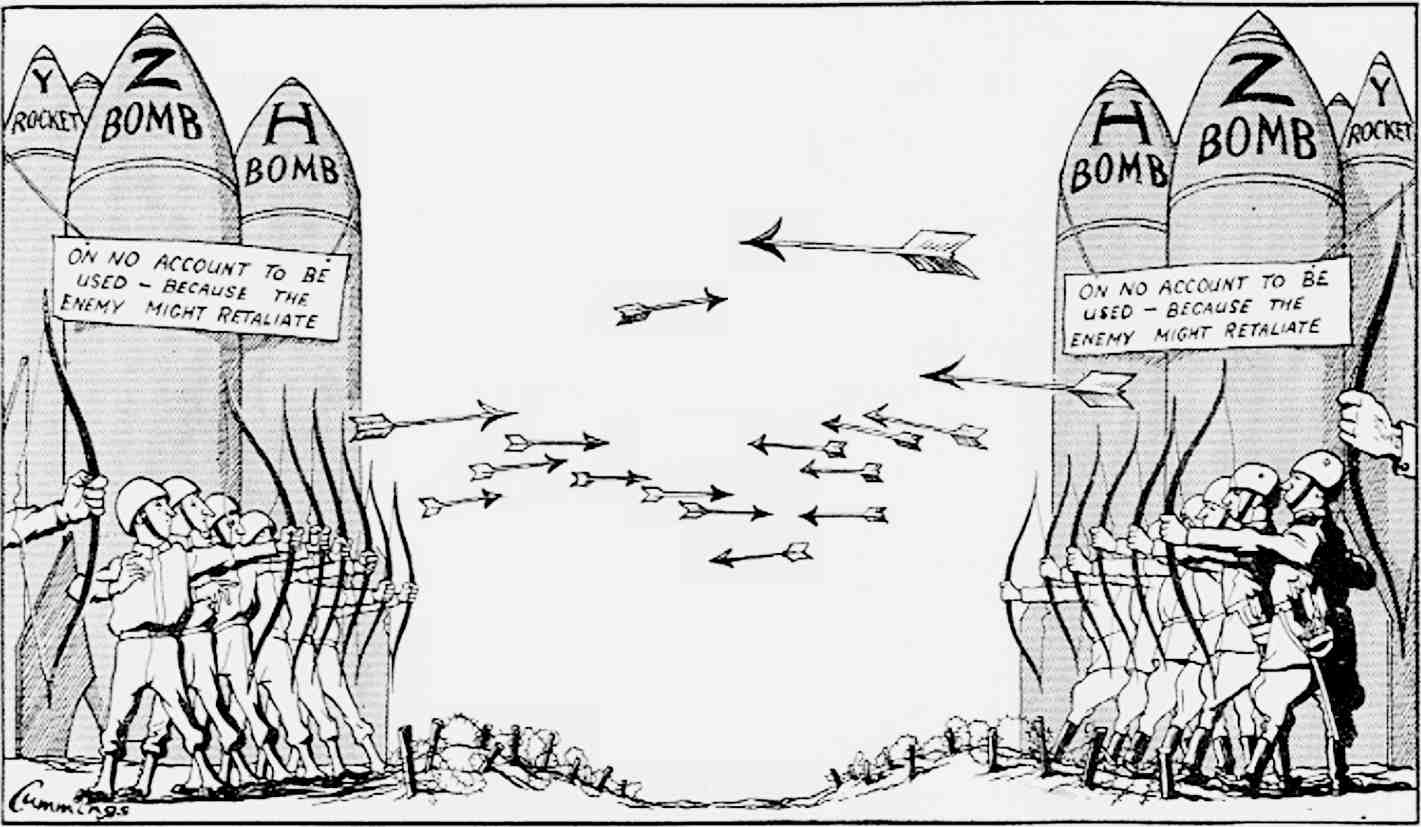
Irony
Irony is the difference between the ways things are and the way things should be, or the way things are expected to be. Cartoonists often use irony to express their opinion on an issue.
When you look at a cartoon, see if you can find any irony in the situation the cartoon depicts. If you can, think about what point the irony might be intended to emphasize. Does the irony help the cartoonist express his or her opinion more effectively?
When you look at a cartoon, see if you can find any irony in the situation the cartoon depicts. If you can, think about what point the irony might be intended to emphasize. Does the irony help the cartoonist express his or her opinion more effectively?

Once you’ve identified the persuasive techniques that the cartoonist used, ask yourself:
- What issue is this political cartoon about?
- What is the cartoonist’s opinion on this issue?
- What other opinion can you imagine another person having on this issue?
- Did you find this cartoon persuasive? Why or why not?
- What other techniques could the cartoonist have used to make this cartoon more persuasive?
